Skip to content
The Upsides, Abu Dhabi off-plan property agency
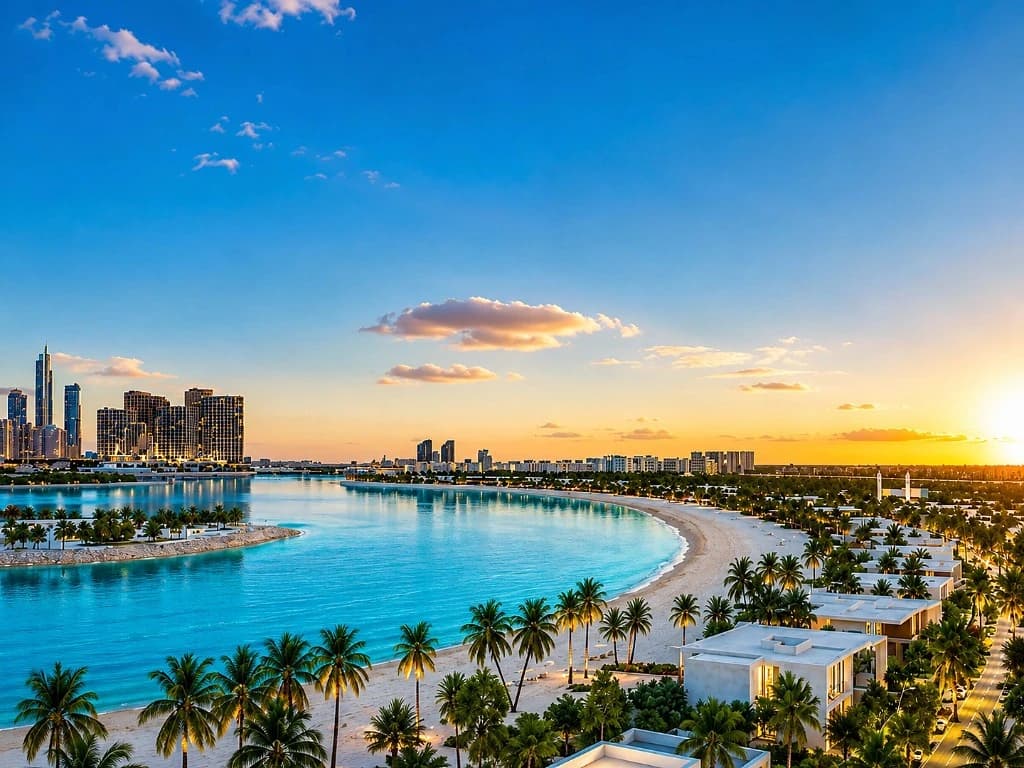
Aerial view of Marsa Al Saadiyat waterfront residences on Saadiyat Island, Abu Dhabi

The Upsides · Investment analysis

Marsa Al Saadiyat Investment Case: The Full Picture

An honest assessment of Marsa Al Saadiyat: supply, pricing, demand drivers, and the risks most marketing material leaves out.

The investment thesis in one paragraph

Marsa Al Saadiyat is a long-horizon capital-appreciation case built on four factors: Abu Dhabi’s later freehold opening relative to Dubai, the price gap between Saadiyat Island and comparable luxury coastal stock in Dubai, Marsa Al Saadiyat’s role as the final master-planned waterfront community on Saadiyat Island, and institutional residential demand linked to ADGM growth in Abu Dhabi. Each factor has a counterweight, covered in the supply, pricing, demand, and risk sections below. Buyers who need near-term liquidity or depend on immediate rental income should treat those counterweights as decision filters, not footnotes.

Supply control: the structural difference

ADREC’s 2025 Abu Dhabi Real Estate Market Report records occupied residential units growing 6.6% annually from 2022 to 2025 while supply grew 2.8%. Controlled supply does not guarantee price rises; it reduces the chance that a flood of similar new stock undercuts asking prices in the same cycle. Marsa Al Saadiyat sits inside that Abu Dhabi pattern as a large but phased masterplan on Saadiyat Island, with first residential sales still subject to official confirmation by Aldar.

The structural point for investors is simple. When new supply arrives faster than end-user and investor absorption, vendors compete on price and incentives. When releases are paced against demand, vendors have more room to defend floors. Exact city-wide unit counts change by reporting period, so treat any single headline figure as directional and verify it against the latest market report before relying on it.

Pricing position: real gap, wrong comparison

ADREC’s 2025 Abu Dhabi Real Estate Market Report records roughly AED 13.7 billion transacted on Saadiyat Island in 2025, about four times the 2022 value. That growth is the destination-level pricing context for Marsa Al Saadiyat buyers comparing Abu Dhabi waterfront stock. See the Saadiyat Island property market; Marsa Al Saadiyat itself has no published residential price list yet, so any unit-level comparison must wait for Aldar’s first release schedules.

Comparisons that place Saadiyat Island beside Hong Kong, New York, or Monaco are a marketing device, not an investment framework. Those markets command premiums because of deeper secondary-market liquidity, longer institutional ownership histories, and established yield benchmarks that Abu Dhabi’s island residential stock has not yet matched at the same scale. A discount to Dubai can be a thesis; a shortcut to global trophy-city pricing is not.

Delivered infrastructure, not promised infrastructure

The amenity case for Saadiyat Island is already built in ways that typical off-plan narratives are not. Louvre Abu Dhabi, the wider Saadiyat Cultural District programme, shoreline beaches, and operating Aldar residential communities already frame daily life on Saadiyat Island. Marsa Al Saadiyat is planned as the waterfront finale of that masterplan, with marina, beach, promenade, and cultural adjacency described in Aldar materials, but Saadiyat Island’s cultural and residential base is not a paper promise.

That distinction matters for capital appreciation logic. Buyers are underwriting an extension of an occupied cultural waterfront, not a greenfield story that depends entirely on future institutions opening. Forward-looking Marsa Al Saadiyat elements such as sales timing, marina berths, and on-site schools remain subject to official confirmation by Aldar. For product layout and registration context, see the Marsa Al Saadiyat project details.

Demand: ADGM and the institutional layer

ADGM’s expansion has added an institutional employment and services layer in Abu Dhabi that public reporting links to rising demand for premium residential stock. Finance, professional services, and related households form a rental and purchase pool that can support Saadiyat Island specifically, given Saadiyat Island’s cultural waterfront positioning relative to other Abu Dhabi districts. The connection is directional: ADGM growth supports absorption potential; it does not guarantee occupancy for any single release at Marsa Al Saadiyat.

Investors should separate structural demand from launch-cycle demand. Structural demand is the slow build of households that want Abu Dhabi freehold living near cultural and beach amenities. Launch-cycle demand is the shorter wave of off-plan buyers who enter when a named release opens. Marsa Al Saadiyat will meet both; only the first supports a multi-year hold if secondary liquidity stays thin.

The risks the marketing leaves out

Three risks sit outside most Marsa Al Saadiyat marketing decks: thin resale liquidity, uncertain near-term rental yields, and competition from Aldar’s own wider Abu Dhabi pipeline. None of these cancel the long-horizon thesis; each can still break a short-horizon plan.

ADREC projects Abu Dhabi residential supply growth accelerating after 2028, precisely where buyers are concentrating today, so handover-year competition is a material risk for 2028–2030 completions.

Resale liquidity

Abu Dhabi’s secondary residential market is thinner than Dubai’s, so exit timelines and achievable resale prices carry real risk. A buyer who needs to sell Marsa Al Saadiyat stock quickly may face wider bid-ask spreads and fewer competing offers than a comparable Dubai coastal unit would attract. Illiquidity is the price of the supply-control argument; treat it as a core assumption, not a remote tail risk.

Rental yield uncertainty

Saadiyat Island’s residential population and tenant pool are still forming relative to longer-established Dubai districts, so near-term yield expectations should stay conservative. Service charges, vacancy during lease-up, and unproven asking rents for unreleased Marsa Al Saadiyat product all sit outside any brochure headline. Buyers who need the asset to pay for itself from year one are mismatched to this release cycle.

Internal competition

Aldar’s pipeline across Yas Island and other Abu Dhabi communities competes for the same regional and international buyer. Marsa Al Saadiyat is not the only waterfront or branded path Aldar will market in the same multi-year window. Capital that could fund a Marsa Al Saadiyat villa or apartment can also fund stock on Yas Island or elsewhere in Abu Dhabi, which caps how unique any single launch narrative can remain.


Who Marsa Al Saadiyat suits, and who it does not

Marsa Al Saadiyat suits buyers with a five-to-eight-year horizon, a capital-appreciation focus, tolerance for illiquidity, and an intent to diversify into Abu Dhabi waterfront freehold rather than concentrate further in Dubai. That profile can absorb delayed sales timing, thin resale books, and conservative early yields while the Saadiyat Island tenant and end-user base deepens.

Marsa Al Saadiyat does not suit short-window flipping or buyers who depend on immediate rental income to justify the purchase. Those briefs belong in deeper, more liquid markets or in completed stock with proven lease history. If the hold period or cash-flow need fails that test, the four-factor thesis is irrelevant.

Questions

Frequently asked questions

Is Marsa Al Saadiyat a good investment?+

Marsa Al Saadiyat can suit a long-horizon capital-appreciation brief on Saadiyat Island in Abu Dhabi, not a short flip or income-first plan. The case rests on supply pacing, a Dubai price gap, delivered Saadiyat Island infrastructure, and ADGM-linked demand, each with liquidity and yield counterweights.

What is the price per square foot on Saadiyat Island?+

There is no single published price per square foot for all of Saadiyat Island; figures are set per community and per unit. Marsa Al Saadiyat has no public residential price list yet, so treat destination guides and peer community asks as indicative only until Aldar releases unit schedules.

Can foreigners buy at Marsa Al Saadiyat?+

Non-GCC nationals can buy residential property on Saadiyat Island because Saadiyat Island is a designated investment zone in Abu Dhabi. Exact title form and registration steps sit in the unit SPA and must be confirmed before reservation.

What are the risks of buying at Marsa Al Saadiyat?+

The main risks are thinner Abu Dhabi resale liquidity than Dubai, uncertain near-term rental yields while Saadiyat Island’s tenant pool is still forming, and competition from Aldar’s wider Abu Dhabi and Yas Island pipeline. Marketing material often understates all three.

How does Marsa Al Saadiyat compare to Dubai off-plan?+

Marsa Al Saadiyat sits in a more controlled Abu Dhabi supply setting with Saadiyat Island’s cultural waterfront already partly delivered, while Dubai off-plan usually offers deeper secondary liquidity and a larger investor crowd. The trade-off is exit speed and proven yield history versus paced supply and Saadiyat Island positioning.

When do Marsa Al Saadiyat residential sales open?+

Aldar materials point to first residential sales in the second half of 2026, subject to official confirmation by Aldar. Unit sizes, payment plans, and a public price list were not published at the time of writing.

Discuss the Marsa Al Saadiyat brief

Book a consultation with The Upsides to review horizon, liquidity tolerance, and how Marsa Al Saadiyat compares with other Saadiyat Island and Abu Dhabi options on your shortlist.

Hot launch

Marsa Al Saadiyat on Saadiyat Island

Aldar Properties launched its landmark waterfront master plan on Saadiyat Island on 22 July 2026. Priority registration is open ahead of first residential sales expected in H2 2026. Its first villa release, Talay, is now revealed.

General information only, not investment advice. Prices, availability, specifications and charges are subject to change. The Upsides is a trading name of a licensed Abu Dhabi real estate brokerage holding authorised agency agreements with the respective developers for the projects referenced on this site (including Aldar Properties and Eagle Hills). This is not an official Aldar Properties PJSC or Eagle Hills website. Confirm details with us and licensed advisors before you commit. Forward-looking statements are subject to official confirmation by the relevant developer.

See also the Disclaimer.